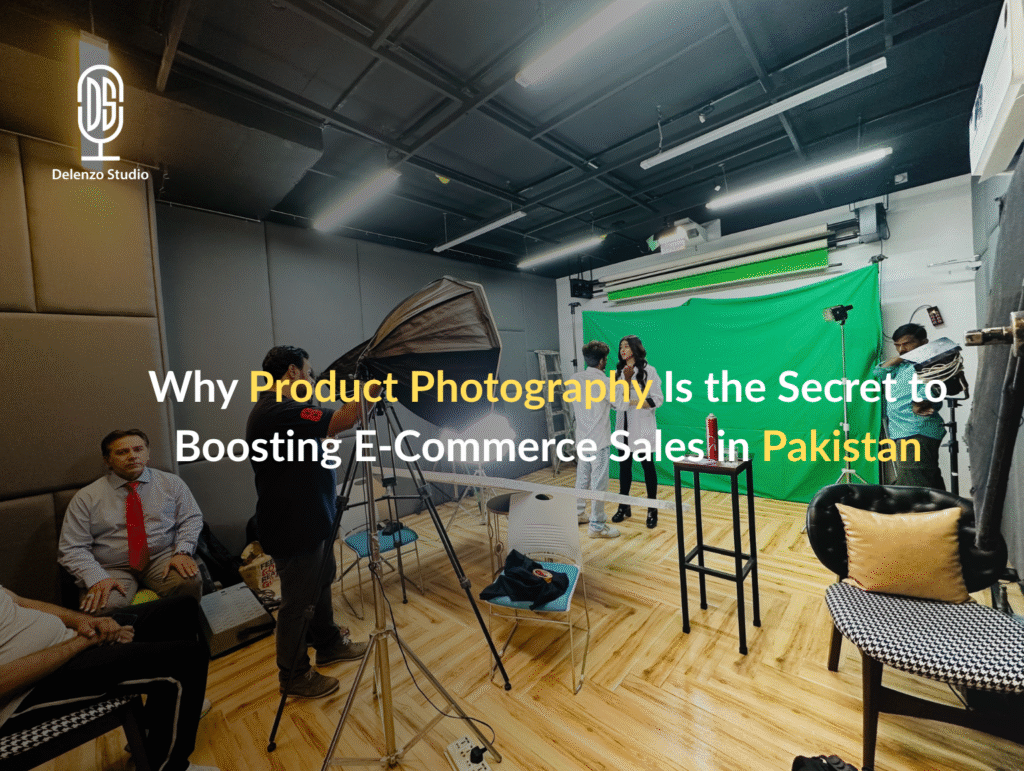
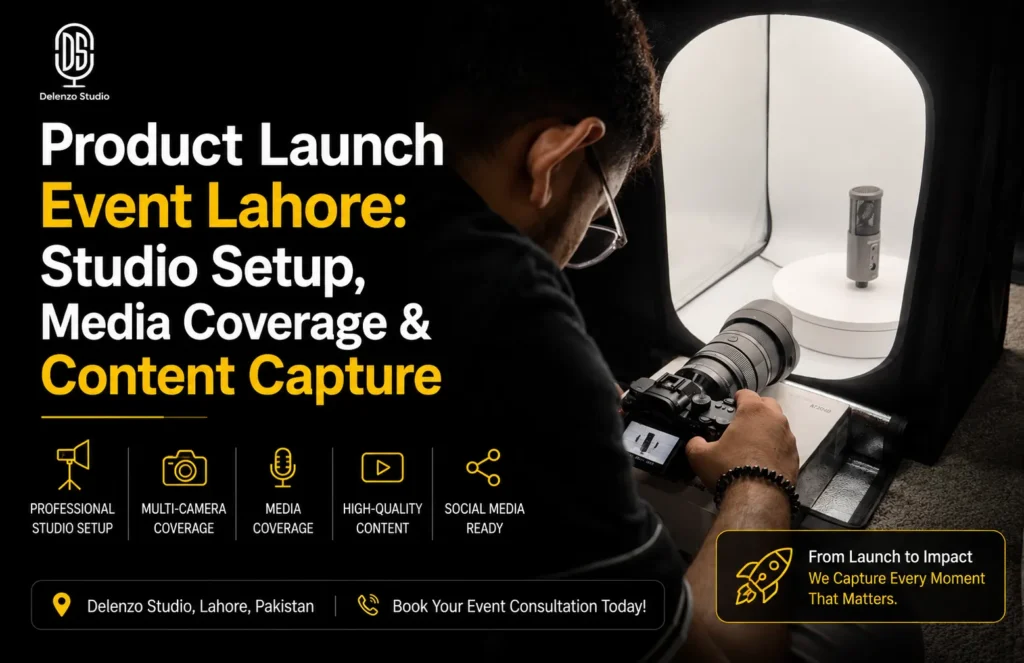
A successful product launch event Lahore brands plan well needs three things working together. First, a venue or studio setup built around the reveal moment. Second, a media coverage plan that serves both the live room and the edit. Third, a content capture strategy that turns one night into weeks of marketing material.
Most launch planning goes wrong for one reason. Teams treat the launch as a single evening instead of a long-term content asset. The stage, the guest list, and the catering get weeks of attention. The footage plan gets an hour on the morning of the event.
That imbalance costs brands months of usable content. The event ends, one recap video goes up, and the shoot is over. A better approach plans the outputs first, then works backwards to the camera positions, audio setup, and run sheet.
If your priority right now is the space itself, our event studio for rent in Lahore page covers venue options in detail. This guide focuses on what happens inside that space and what you walk away with.
What a Product Launch Venue Setup Actually Needs
A launch venue has to do three jobs at once. A strong venue needs to hold your audience comfortably, present the product clearly at the reveal, and allow guests to move around, talk, and handle the product afterwards.
Space planning starts with the reveal, not the seating. Decide where the product sits and where the audience looks from. Everything else arranges itself around that sightline.
AV reliability matters more than AV scale. A clean projector or LED screen, tested audio, and working mics beat an oversized rig that fails mid-presentation. Always run a full technical rehearsal before doors open.
Layout flexibility is the piece brands underestimate. Your formal program needs rows or clusters facing the stage. The hour after it needs an open floor for demos, media chats, and networking. A room that cannot switch between the two forces awkward compromises.
A dedicated product launch studio setup teams can rely on also gives you controlled lighting. Hotel ballrooms and restaurant halls often carry mixed colour temperatures and low ceilings. Both make footage harder to grade and photos harder to correct.
For a full venue comparison, including capacity, pricing, and AV inclusions, see our event space details before locking a date.
The Product Launch Shot List — What to Capture and Why
A shot list is the single highest value document in launch planning. It removes guesswork on the day and protects you from missed moments. Share it with your coverage team at least a week ahead.
Strong product launch photography Lahore brands can actually reuse comes from planned coverage, not luck. Here is the working list we use for launches.
| Moment | What to capture | Why it matters |
| Pre-event setup | Empty venue, branding, stage | Clean context for recaps and case studies |
| Product detail | Close-ups, textures, packaging | Feeds product pages, ads, and carousels |
| Arrivals and registration | Guests entering, check-in desk | Shows scale without needing a crowd |
| The unveiling | Wide, mid, tight reveal angles | The most reused clip from any launch |
| Speaker coverage | Presenter on stage, slides | Powers keynote cutdowns and quote graphics |
| Audience reactions | Faces, applause, raised phones | Adds credibility staged footage cannot |
| Demo and hands-on | Guests testing the product | Best proof content for post-launch marketing |
| Media interactions | Interviews, press walkthroughs | Supports PR follow-up and partner sharing |
| Team portraits | Founders, executives, full team | Reusable for months on web and LinkedIn |
Two notes on timing. Shoot product detail images before guests arrive, when the room is clean and quiet. Take team portraits after the formal program, once everyone has relaxed.
Reaction shots need a second shooter or a roaming camera. One operator locked on stage cannot cover faces at the same time.
Planning Camera Coverage for the Edit, Not Just the Live Room
The live room feels covered when a camera is rolling. The edit tells a different story. Editors need options, and options come from angles.
Plan a minimum of two cameras for any launch with a stage program. One stays locked wide on the full stage. The second covers tighter presenter shots and moves for reactions and details.
A third camera earns its cost at the reveal. Product unveilings happen once and last seconds. A dedicated angle on the product itself protects that moment completely.
Audio deserves equal attention. Record a clean feed straight from the sound board or a lavalier mic on the presenter. Camera mic audio picks up room noise, air conditioning, and crowd movement. Cleaning that up in post costs time and rarely sounds right.
Useful product launch video coverage also depends on small production habits:
- Roll before the moment starts and hold after it ends, so editors have handles.
- Keep a consistent white balance across cameras to avoid grading mismatches.
- Capture ten to fifteen seconds of static b-roll for every key element in the room.
- Record ambient room sound separately for a few minutes.
- Log timecodes for the reveal and key speaker lines during the event.
These habits cost nothing on the day. They save hours in the edit and improve every deliverable that follows.
One Event, Many Deliverables — Planning Content Capture Strategically
One well-planned shoot should produce many finished pieces. The principle of one event multiple content deliverables only works when capture accounts for every output upfront. Filming reactively produces one video and a folder of unusable clips.
Here is what a single launch shoot can realistically deliver.
| Deliverable | Typical length | Primary use |
| Social recap | 30 to 60 seconds | Instagram, TikTok, LinkedIn feed |
| Website or partner cut | 90 to 120 seconds | Homepage, investor updates, sales decks |
| Product reveal clip | 15 to 30 seconds | Paid ads and launch announcements |
| Keynote segments | 2 to 5 minutes each | YouTube, blog embeds, PR distribution |
| Reaction clips | 10 to 20 seconds each | Social proof and testimonial content |
| Photo gallery | 60 to 150 images | Press, website, ongoing social posts |
| Vertical cutdowns | 15 to 45 seconds | Reels, Shorts, Stories over several weeks |
Each of these needs different footage. The reveal clip needs a tight product angle. Reaction clips need faces, not the stage. Vertical cutdowns need footage framed with mobile crops in mind.
Use this product launch content capture checklist during planning:
- List every deliverable you want before booking the coverage team.
- Assign at least one camera angle or shot type to each deliverable.
- Confirm which moments must be captured vertically as well as horizontally.
- Identify the three clips you cannot afford to miss.
- Agree on file delivery format and where the team will upload footage.
Delivery timelines should match how marketing actually works. A small highlight gallery of ten to twenty images within twenty four hours keeps same-day momentum alive. Guests are still posting, and your brand should be posting alongside them.
The full edited gallery follows within a few days. Video content takes longer depending on complexity. A single recap edit may take three to five days. A full package with keynote segments and cutdowns usually takes one to three weeks.
Agree on these timelines in writing before the event. Vague delivery promises are the most common source of post-launch frustration.
Coordinating Photography/Video Coverage With Press Attendance
Press attendance changes how coverage runs. Journalists and influencers arrive with their own cameras, priorities, and deadlines. Without coordination, they compete with your team for the same moments.
Four steps prevent most conflicts:
- Share a press list in advance. Your coverage team needs names, outlets, and the access each one expects.
- Block a media walkthrough. Fifteen minutes with the product, scheduled into the run sheet.
- Move executive interviews after the program. Never run them against stage coverage.
- Name one media point of contact. Your coverage team should not negotiate access mid-event.
Reliable event media coverage Pakistan brands can depend on comes from this sequencing. Everyone knows where to be and when.
Send a press kit for product launch Pakistan journalists can use immediately. Include high resolution product images, company background, product specifications, spokesperson names, and contact details. Send it before the event, not after. Reporters write faster when assets already sit in their inbox.
Common Mistakes When Planning Product Launch Coverage in Lahore
Most coverage problems trace back to five avoidable decisions. Run through them while building your product launch event planning checklist.
- Treating the event as a single-use moment. Planning for one recap video wastes the shoot. The same evening could fill your content calendar for two months.
- Filming only a wide room shot. A single locked wide angle gives editors nothing to cut to. Presenter close-ups and product detail angles are what make an edit watchable.
- Skipping a clean board audio recording. Relying on camera mic audio produces echo, crowd noise, and unusable speaker segments. A direct feed costs almost nothing to set up.
- Not briefing the coverage team on priorities. Photographers cannot read your mind about which moments matter most. Name the reveal, the key speaker lines, and the reactions you want in advance.
- Inviting press without coordinating coverage. Media requests and brand content needs collide when nobody plans for both. The result is gaps in your own footage on the night that mattered.
Conclusion — Planning a Product Launch That Pays Off Beyond the Event Night
Venue and AV setup matter. They decide whether the evening runs smoothly and whether the reveal lands. But they are not where the long-term return sits.
The real value of a product launch event Lahore companies invest in comes from planning coverage and content capture early. Decide your deliverables first. Build the shot list around them. Brief the team, coordinate the press, and lock the audio setup before the doors open.
Done this way, one evening produces weeks of usable marketing content. Done reactively, it produces one video that gets posted once and forgotten.
Delenzo Studio offers both the space and the coverage in one booking. You can plan your reveal, shoot it properly, and receive edit-ready content from a single team. Explore our video production services for combined venue and coverage planning, or start with our event studio for rent in Lahore page if the space is your first priority.
Ready for Your Next Photoshoot?
Book a professional photo studio at Delenzo Studio and capture your ideas with the right space and equipment.
Book Your PhotoshootFrequently Asked Questions
A complete shot list covers nine moments: pre-event setup, product detail shots, arrivals, the unveiling, speaker coverage, audience reactions, hands-on demos, media interactions, and team portraits after the program.
One well-planned launch shoot delivers six or more videos: a 30 to 60 second social recap, a 90 to 120 second website cut, a reveal clip, keynote segments, reaction clips, and vertical cutdowns.
Expect a highlight gallery of 10 to 20 images within 24 hours. Full photo galleries follow in a few days. Video takes three days to three weeks, depending on package complexity.
Yes. A launch needs a dedicated camera on the reveal, since unveilings happen once and last seconds. Two cameras cover most regular events. Clean board audio also matters more here.
Planning for one recap video only. Treating the launch as a single-use moment wastes footage that could fill two months of content. Decide every deliverable before booking the coverage team.