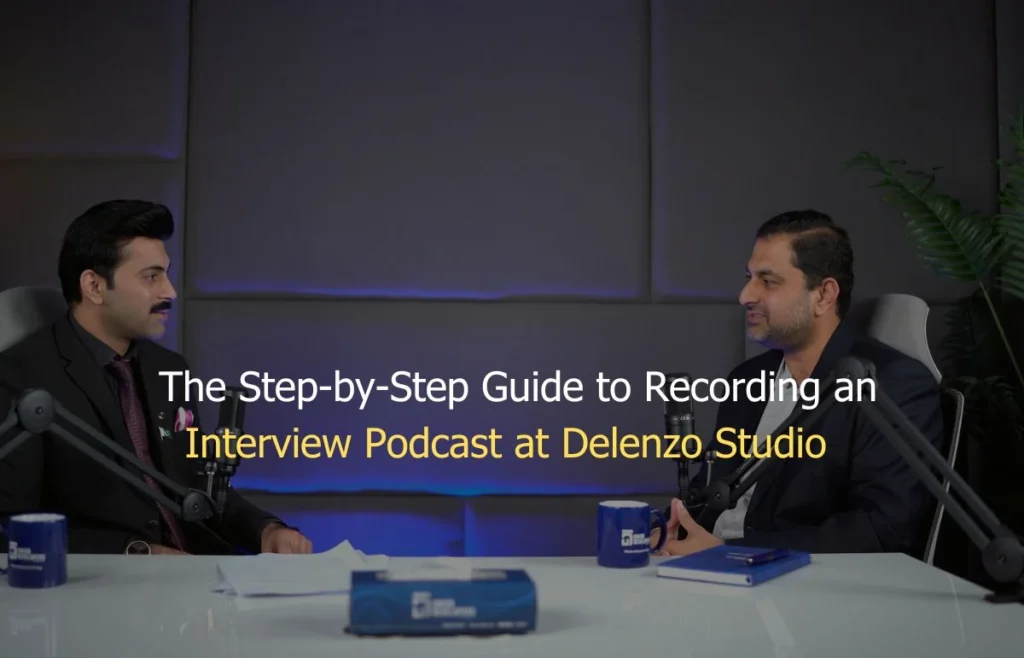
Starting an interview podcast is one of the smartest moves you can make right now. Podcasting has grown into a powerful medium for sharing ideas, stories, and real human expertise. People are listening more than ever on their commute, at the gym, and during their lunch break.
But here’s the thing most people overthink. They worry about gear, sound quality, and getting everything perfect before they even hit record.
However, the truth is, a great podcast starts with a clear plan and the right environment. The gear matters less than your mindset and preparation.
Whether you’re a first-timer or already have a few episodes under your belt, this guide walks you through everything. From choosing your guest to publishing on Spotify and YouTube, we cover every step.
And if you’re based in Lahore and want professional-grade results without the hassle, Delenzo Studio is built exactly for creators like you. Let’s get started.
What Is an Interview Podcast?
An interview podcast is a format where a host sits down with a guest, usually an expert, entrepreneur, creator, or storyteller and has a real conversation. The host asks questions. The guest shares knowledge, experience, or opinions. Listeners tune in to learn something or get a fresh perspective.
It sounds simple. And honestly, it is when you know what you’re doing. In fact, the best interview podcasts feel like eavesdropping on a fascinating conversation. They are not scripted. They flow naturally. The host prepares well, the guest feels comfortable, and the result is engaging content that keeps listeners coming back. This format works across every niche business, health, education, entertainment, tech, and more.
Interview vs Solo Podcast
A solo podcast is just you talking to your audience sharing tips, thoughts, or lessons. It requires strong scripting and a confident delivery style. An interview podcast brings in a guest, which naturally creates a back-and-forth dynamic. This makes the content feel more alive and varied. Guests also bring their own audience, which can help you grow faster. Therefore, if you’re just starting out and want content that builds trust quickly, the interview format is usually a smarter first choice.
Why Interview Podcasts Are Popular
People love hearing real conversations. An interview podcast gives listeners access to voices and stories they wouldn’t normally find. When you’re sitting across from an expert, your audience trusts your platform more by association, which adds credibility to your brand. Moreover, interview content is highly shareable because guests often promote the episode to their own audiences, helping expand your reach without extra effort.
The digital audience in Pakistan is also expanding quickly. According to recent state of digital in Pakistan usage data, there were 117 million internet users by the end of 2025, representing 45.6 percent online penetration. In addition, the country had 79.9 million social media user identities in October 2025, equal to 31.2 percent of the population. As internet and social media usage grows, more people are discovering long-form conversations through podcasts, YouTube, and streaming platforms.
Essential Equipment for an Interview Podcast
Importantly, good equipment doesn’t mean spending a fortune. But it does mean using the right tools for the job. Here’s what you need to record a podcast that sounds and looks professional.
Podcast Microphones
The microphone is the most critical piece of podcast recording equipment. A bad mic makes even the best conversation sound amateur. Dynamic microphones like the Audio Technica AT2040 or RØDE NT1 cardioid condenser microphone are great for studio setups. They reject background noise well and produce a warm, broadcast-ready sound. Condenser mics pick up more detail but require a quieter room. For a two-person interview, each person should have their own dedicated mic. Never share one microphone; it ruins the audio balance and makes editing a nightmare. For example, at Delenzo Studio, you get access to professional-grade microphones included in your session.
Cameras and Lighting
Video podcasts are booming right now. Recording your sessions on camera lets you repurpose content for YouTube, Instagram Reels, and TikTok. A mirrorless camera like the Sony A7III or Sigma BF gives you crisp, cinematic quality. Pair it with a ring light or softbox lighting, and the difference is instantly visible. Flat lighting makes faces look tired. Good lighting makes guests look confident and your brand look polished. In a professional studio, lighting is already set up and calibrated for you. You don’t have to guess or experiment, just sit down and record.
Soundproof Studio Setup
The room you record in matters just as much as your microphone. Hard walls, tile floors, and open spaces create echo and reverb. That “hollow” sound is a dead giveaway of home recording. A proper podcast setup includes acoustic foam panels, bass traps, and diffusers. These materials absorb sound reflections and create a clean, dry recording environment. A soundproofed room also blocks street noise, AC hum, and footsteps from other rooms. As a result, this is something most home studios simply cannot replicate without significant investment.
Plan Your Interview Podcast
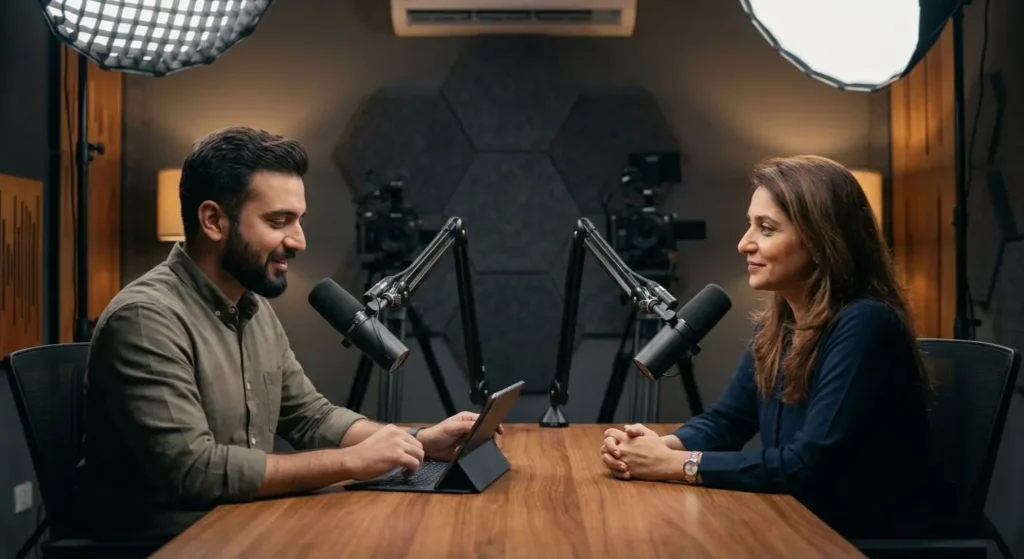
Recording is the fun part. But planning your interview podcast properly ensures every episode flows naturally for listeners. A poorly planned episode sounds scattered and wastes your guest’s time. Here’s how to set yourself up for a smooth, compelling recording session.
Choose the Right Guest
Not every impressive person makes a great podcast guest. Look for someone who has a specific story, clear expertise, or a unique take on your topic. The best guests are people who talk in stories, not just facts. They’re passionate, articulate, and have something real to share with your audience. Start with guests you already know. A warm introduction leads to a more relaxed conversation. As your show grows, reach out to new voices. Always check if their audience overlaps with yours. That’s how you grow faster with every episode.
Prepare Interview Questions
Great questions lead to great answers. Don’t just rely on generic prompts. Research your guest before the session. Read their work, watch their interviews, understand their journey. Prepare 10 to 15 solid questions but don’t stick rigidly to the list. The best moments in an interview podcast happen when you go off-script and follow the conversation naturally. Mix broad opener questions (“Tell me about your background”) with specific, insightful ones. Always end with a forward-looking question. It leaves the listener with something to think about.
Plan the Episode Flow
Every good episode has a shape. Think of it like a story opening, middle, and close. Start with a warm intro where you introduce the guest and set the context. Then move into the core conversation, building in depth as the episode progresses. End with a strong takeaway or call to action for your audience. Plan your timestamps in advance if you want clean chapter markers later. A well-structured episode is easier to edit, easier to listen to, and more likely to get shared.
Record an Interview Podcast at Delenzo Studio
At this stage, planning is done. Your guest is confirmed. Now it’s time to record. Doing this at the right location makes a huge difference in your final output. At Delenzo Studio, the setup is already in place. You just show up and create. The studio is designed specifically for podcast creators who want professional results without the technical headache.
Book Your Studio Session
Booking a session is straightforward. You choose your time slot, confirm your guest, and arrive ready to record. The team sets up the interview podcast setup before you arrive. Microphones are tested. Cameras are positioned. The lighting is balanced. You won’t waste your session fiddling with cables or troubleshooting audio levels. Every detail is handled so your session runs smoothly from start to finish. You and your guest can focus entirely on having a great conversation and that’s what actually makes a great podcast.
Home Recording vs Professional Studio
A lot of people start their podcast at home. That’s totally fine for getting started. But there comes a point when the limitations of home recording start to hold you back. The audio quality plateaus. The setup becomes frustrating. And the results don’t match the effort you’re putting in. Here’s an honest comparison between recording at home and recording in a professional studio like Delenzo.
Audio Quality Difference
Home recordings often pick up room echo, background hum, and inconsistent levels. Even with a good microphone, an untreated room will color your audio negatively. In a professional studio, the acoustics are engineered for clean, broadcast-ready sound. Listeners notice the difference even if they can’t explain why. Clean audio builds credibility. Muddy audio makes people switch off. It’s that simple. In contrast, upgrading your recording environment is often the single biggest quality jump you can make.
Equipment and Production Support
At home, you buy, set up, and troubleshoot everything yourself. That takes time, money, and technical knowledge most creators don’t have. In the professional studio, equipment is ready to use. You get the mics, cameras, lighting, and audio interface all calibrated and tested. There’s also on-site support if anything goes wrong mid-session. Meanwhile, that safety net is worth a lot, especially when you have a guest on-site and can’t afford technical problems.
| Feature | Home Recording | Studio Recording |
| Audio Quality | Inconsistent | Broadcast-ready |
| Equipment | Limited | Professional gear |
| Setup Time | High | Minimal |
| Acoustic Treatment | Basic or none | Fully soundproofed and acoustically treated |
| Technical Support | Self-managed troubleshooting | On-site engineers and production support |
Edit and Publish Your Podcast
After recording, your job is only half done. What you do afterward shapes how the world hears your work. Here’s a quick breakdown of the post-production steps every podcaster should know.
- Basic Audio Editing: Trim silence, cut filler words, and level your audio in tools like Audacity, Adobe Audition, or Descript. Clean audio keeps listeners engaged from start to finish.
- Create Short Clips for Social Media: Pull 30 to 90 second highlights from your episode. These short clips drive traffic back to the full episode on Spotify and YouTube. Tools like Opus Clip or CapCut make this fast and easy.
- Publish on Spotify and YouTube: Upload your audio to a hosting platform like Buzzsprout or Anchor for Spotify distribution. Upload the full video version to YouTube. Consistent publishing builds audience trust and improves your discoverability over time.
Why Choose Delenzo Studio in Lahore
If you’re looking for a podcast studio in Lahore that actually understands creators, Delenzo Studio is your answer. Situated in the heart of Lahore, the studio is easy to reach from any part of the city. Furthermore, it is designed from the ground up for podcasters, content creators, and brands.
You get a fully treated acoustic room, professional microphones, camera rigs, and studio lighting all in one place. The team knows how to make your session run smoothly, whether you’re a first-timer or a seasoned host. Delenzo Studio also offers flexible booking options. Morning, afternoon, evening you pick what works for your schedule and your guest.
Lahore’s creator community is growing fast. Delenzo is where serious creators come to make content that actually stands out. When your interview podcast sounds great and looks great, people share it. And when people share it, your audience grows. That’s the real return on booking a professional studio session.
Final Thoughts
Starting an interview podcast doesn’t have to be complicated. Pick a focus, choose a great guest, prepare thoughtful questions, and record in an environment that makes you both sound your best. The content will take care of itself when the foundation is solid. The creators winning in the podcast space today aren’t necessarily the most talented. They’re the most consistent and they invest in quality where it matters. Sound quality matters. Video matters. Energy matters.
Frequently Asked Questions
What equipment is needed for an interview podcast?
Ultimately, if you’re in Lahore and ready to take your podcast seriously, Delenzo Studio is ready for you. Book your first session, bring your guest, and record something you’re genuinely proud of. That’s how great podcasts are born not from perfect plans, but from taking action in the right environment.
What equipment is needed for an interview podcast?
You need a dedicated microphone for each speaker, an audio interface, headphones, and a soundproofed room. A camera and good lighting are essential for video podcasts. Professional studios like Delenzo Studio in Lahore provide all this equipment, so you can focus entirely on the conversation.
How long should a podcast interview be?
Most interview podcasts run between 30 to 60 minutes. That’s enough time to go deep without losing the listener’s attention. However, the right length depends on your topic and audience. A focused 35-minute episode often outperforms a loose 90-minute one. Quality always wins over length.
Can beginners record podcasts at a studio?
Absolutely. Professional studios are actually ideal for beginners. Everything is set up and tested before you arrive. You don’t need any technical knowledge. The studio team guides you through the process. At Delenzo Studio, first-timers feel confident and walk away with professional-quality audio on their very first session.
Where can I record a podcast interview in Lahore?
Delenzo Studio is a dedicated podcast recording studio located in the heart of Lahore. It offers a fully soundproofed room, professional microphones, camera rigs, and studio lighting all in one place. Whether you’re a beginner or an experienced host, it’s built for creators who want serious results.