Choosing the right backdrops for portrait photography is the first real creative decision you’ll make and it happens long before the shutter clicks.
Most photographers spend hours obsessing over lighting ratios and lens choices, then grab whatever backdrop is closest to hand. That’s a mistake. The background you choose sets the mood, directs the viewer’s eye, and determines whether the final portrait feels intentional or accidental. Get it right and the image looks polished. Get it wrong and even flawless lighting can’t rescue it.
This guide walks through every backdrop decision that actually matters: which material suits specific shoot types, which colors flatter different skin tones, and which size you genuinely need for the work you’re doing. Whether you’re booking a studio session or building out your own space, this is where the planning starts.
Why the Right Backdrop Makes or Breaks a Portrait
The backdrop controls what the viewer notices first. A clean, well-chosen background pushes the eye straight to the subject’s face. A cluttered or mismatched one pulls attention in every wrong direction and no amount of retouching fixes that in post.
Color is doing more work than most people realize. Warm backgrounds add natural glow to skin. Cool tones create a sense of authority and calm. The wrong shade can actively wash a subject out or create unflattering color casts that persist through editing.
Texture carries its own message too. A smooth surface reads as corporate and precise. A painted or fabric texture adds creative depth and a more human quality.
A LinkedIn headshot calls for a completely different backdrop than a creative portfolio shoot. The backdrop isn’t decoration. It’s a foundational tool and professionals choose it before they move a single light.
Types of Portrait Photography Backdrops — A Complete Overview
Not all backdrops are created equal. Each material has real strengths, real limitations, and specific contexts where it performs best. Here’s what you need to know about the most common options.
Seamless Paper Backdrops
The seamless paper backdrop is the workhorse of professional studios worldwide, and for good reason. It comes in large rolls typically 53 inches or 107 inches wide and you simply pull down a fresh section for each session. The surface is smooth, matte, and non-reflective, which means it renders clean and even under studio lighting without fighting the camera for attention.
Paper is affordable, available in dozens of colors, and genuinely effortless to maintain: when a section gets scuffed or dirty, you cut it off and roll down more. The trade-off is durability. Paper tears easily and can’t withstand heavy foot traffic or repeated full-body sessions where subjects are moving across the floor. It belongs in controlled studio environments where it’s treated with care.
For headshots, corporate work, and product photography, seamless paper remains the benchmark.
Muslin Backdrops
Muslin is a cotton-based fabric that’s lightweight, packable, and a longtime favorite for photographers who shoot on location. It drapes naturally and creates soft, organic folds that add character to the frame without overwhelming it. The fabric absorbs light rather than bouncing it, which keeps reflections out of your shot.
The practical challenge with muslin is wrinkles. It creases significantly during storage and transport, so you’ll need to steam or iron it before each use. That said, many photographers actually lean into the textured quality particularly for lifestyle portraits, creative headshots, and anything with a less formal, more editorial feel.
Muslin backdrop is available in solid colors and hand-painted versions. The painted options, in particular, produce a depth and warmth that’s hard to replicate with any other material.
Canvas Backdrops
If longevity is the priority, canvas is worth the investment. It’s thick, heavy, and built to last for years under regular studio use — which is exactly why hand-painted canvas backdrops have been a staple of fine-art portrait studios for generations.
The painted surface creates rich tonal variations and textures that no printer can accurately reproduce. Each canvas has a slightly unique character, and that uniqueness reads beautifully in the final image. The downsides are weight and upfront cost. Canvas is significantly heavier than paper or muslin, which makes transport difficult, and quality hand-painted pieces carry a real price tag. For a permanent studio setup, though, it’s a long-term asset rather than a recurring expense.
Vinyl Backdrops
Vinyl is the practical choice for high-traffic studios and messy sessions. Its non-porous surface wipes clean in seconds, making it ideal for family portraits, pet photography, and children’s sessions where spills and smudges are inevitable.
Many vinyl backdrop options feature printed patterns, wood floors, brick walls, abstract textures which can add environmental context to a portrait without leaving the studio. The key caveat: vinyl can produce glare under direct lighting, so you’ll need to angle your lights carefully or use diffusion. Print quality also varies significantly between suppliers. Low-resolution printed vinyl looks visibly fake, so invest in high-resolution options or test samples before committing.
Collapsible Pop-Up Backdrops
Collapsible backdrops exist for one reason: speed. They fold into a compact carrying case, pop open in seconds, and require zero rigging. Most are reversible, giving you two usable colors commonly black and white in a single product.
The size limitation is real, though. Most collapsible options max out around 5×7 feet, which is enough for tight headshot crops but not full-body portraits. They’re well-suited to on-location corporate shoots, event photography, and travel, where setup time and portability matter more than creative flexibility.
Polyester Fabric Backdrops
Polyester has gained significant ground in recent years, largely because it solves the wrinkle problem that plagues muslin. It’s machine washable, wrinkle-resistant, and folds without the creasing that requires a steamer before every shoot.
The material has a slight sheen compared to muslin, which can help with vibrant color reproduction but may also cause subtle reflections under strong studio lights. Overall, polyester is the low-maintenance option — fold it, pack it, pull it out, and shoot. For photographers who need reliable results without a lengthy prep process, it’s a sensible choice.
Green Screen Backdrops
Green screens open up a different creative category entirely: chroma key compositing, where the background is replaced in post-production with any digital image you choose. Evenly lit, wrinkle-free green surfaces key out cleanly in editing software. Even small shadows or creases complicate the compositing process and create artifacts that take time to fix.
Green screens are essential for certain commercial and creative projects, but for standard portrait work they add significant workflow complexity. Use them when the brief specifically requires background replacement — not as a shortcut to avoid choosing a real backdrop.
Best Backdrop Colors for Portrait Photography — Type by Type
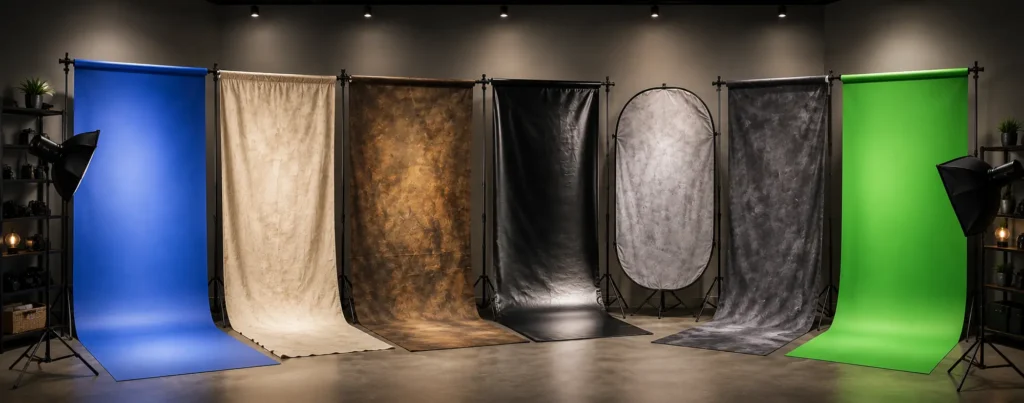
Color is where creative decisions carry the most weight. The right photography backdrop colors can transform a technically competent portrait into something genuinely memorable. Here are the most useful options and exactly when each one earns its place.
White Backdrop — Clean, Versatile, and the Corporate Photography Standard
White backdrop photography is the default choice across industries, and the reason is simple: it works. It’s compatible with virtually every skin tone, outfit choice, and lighting setup. White keeps the focus entirely on the subject and communicates professionalism without visual noise. Corporate headshots, medical portraits, and real estate agent photos gravitate toward white because it projects clarity and confidence.
The one technical detail that matters: distance. Place your subject at least four to five feet from a white backdrop to prevent shadows from reading on the surface and to keep the white looking genuinely bright rather than flat grey. Move them too close and the backdrop loses its punch.
Grey Backdrop — The Most Universally Flattering Neutral for Any Subject
If you’re building a studio and can only buy one backdrop, grey is the answer. It flatters both warm and cool skin tones equally well, and it gives you more lighting flexibility than any other single color. Expose it brightly and it reads close to white. Flag the light away from it and it drops toward dark charcoal. One backdrop, multiple looks which is exactly what a tight budget requires.
Grey background photography also gives you a neutral canvas that works across industries from corporate headshots to creative portraits without ever feeling out of place. Medium grey is the safest starting point for any photographer expanding their studio. It handles headshots, half-body portraits, and corporate work without requiring any creative compromise.
Charcoal and Dark Grey — Authority, Executive Portraits, and Financial Sector Headshots
Charcoal communicates seriousness and professional weight. It’s the backdrop of choice for executive portraits, law firm headshots, and finance industry professionals who need their portrait to project competence rather than approachability.
The darker tone adds presence without the full intensity of black, and it creates a subtle tonal separation between subject and background that reads as polished and editorial. Pair charcoal with directional lighting and it produces portraits that look equally at home on a corporate website or a printed annual report. It performs especially well with darker suits and formal business attire.
Black Backdrop — Drama, Contrast, and Cinematic Portrait Work
Black backdrop photography strips away all visual context and forces the viewer’s attention onto the subject alone. It’s the most dramatic option available, and used well, it’s also one of the most powerful.
Black works for artistic portraits, musician photography, and cinematic headshots where mood matters as much as likeness. It pairs naturally with rim lighting and low-key setups that sculpt the subject with shadow and highlight. The technical challenge is controlling light spill — any stray light hitting the backdrop will shift it toward grey. You need meaningful distance between your subject and the background, typically a minimum of six feet, to maintain true black throughout the frame.
Beige and Warm Neutral — Approachable, Lifestyle, and Personal Branding Sessions
Warm neutrals beige, cream, sand, mocha have become the defining colors of personal branding photography in the last few years. They add softness and warmth without introducing a strong color cast, which makes them forgiving across a wide range of skin tones and outfit choices.
These tones feel inviting and grounded. Coaches, wellness professionals, therapists, and entrepreneurs building an approachable personal brand consistently gravitate toward them. A warm neutral also serves beautifully as a brand shoot backdrop in naturally lit studio spaces, where it interacts with window light in a way that cooler tones simply don’t.
Textured Earth Tones — Natural Warmth for Creative and Editorial Portraits
Olive, terracotta, dusty rose, and muted sage belong to the earth tone family, and they bring a warmth and personality to portraits that solid neutrals can’t fully match. These colors work especially well for maternity photography, creative headshots, and editorial projects where the image needs to feel organic and considered rather than clean and corporate.
Hand-painted or printed textures in these tones add a second layer of visual interest depth without distraction. The subject remains the clear focal point, but the background feels like a deliberate creative choice rather than an afterthought.
Bold Color Backdrops — Burgundy, Navy, Forest Green for Personal Branding and Editorial
Bold colors make a direct statement. Burgundy, navy, and forest green are the most practical of the bold options because they’re rich and saturated without tipping into visual chaos.
The Navy conveys trust and stability. Burgundy adds warmth, confidence, and a touch of authority. Forest green feels grounded and currently it’s performed particularly well in branding sessions over the last two years. These colors work for personal branding shoots, author photos, and creative professionals whose portraits need energy and character.
The discipline required with bold colors is matching: the backdrop needs to complement both the subject’s skin tone and their wardrobe. A quick test shot at the start of the session costs thirty seconds and prevents an entire shoot from going in the wrong direction.
Gradient Backdrops — Modern Look Trending in 2025 and 2026 for Corporate Photography
Gradient backdrops blend two tones across the frame in a seamless transition that adds depth and a distinctly contemporary quality. Grey-to-black and brown-to-grey are the most popular combinations right now, and both photograph exceptionally well for website headers and LinkedIn profile images.
Many professional studios now include gradient options as part of their standard backdrop selection. It’s a subtle upgrade barely noticeable in a thumbnail but it consistently elevates how a portrait reads at full size. If your corporate clients are asking why their headshots look slightly flat compared to competitors, a gradient backdrop is often part of the answer.
Backdrop Sizes — What You Actually Need for Each Shoot
Buying the wrong size backdrop is one of the most common and easily avoidable studio mistakes. Too small and you’re constantly fighting visible edges. Too large and you’re paying for material you’ll never use. Here’s what each common size actually covers.
5×7ft — Compact Size for Solo Headshots and Tight Studio Setups
A 5×7 foot backdrop is the smallest practical size for portrait work. It covers enough area for a tightly framed headshot but leaves very little room for subject movement. Any significant shift to the left or right risks showing the backdrop edge in frame.
This size works well in small rooms, home studios, and on-location setups where space and portability are the primary constraints. Use it specifically for close-up headshots where the subject will stay in one position. For anything looser or more dynamic, you’ll need more coverage.
8×10ft — The Standard Studio Size for Portraits, Half-Body, and Small Groups
The 8×10 foot backdrop is the industry standard for portrait photography, and it earns that status. It provides enough width for comfortable subject positioning, enough drop for half-body and three-quarter portraits, and enough room for small adjustments during a session without chasing the edges of the frame.
This single size handles the overwhelming majority of backdrops for portrait photography needs: solo headshots, couples portraits, small family groups. If you’re buying one backdrop for general studio use, 8×10 is where to start.
9×12ft and Above — Full-Body, Fashion, and Group Portrait Sessions
Full-body portraits, fashion editorials, and group shoots need real estate. A 9×12 foot backdrop or larger gives you the freedom to work without constantly checking whether the background extends far enough in frame.
At this size, a subject can stand at full height with room to spare, and multiple subjects can be positioned side by side without any creative compromise. The practical considerations scale up accordingly: heavier stands, wider crossbars, and greater ceiling height all become necessary. Plan the studio space before buying the backdrop, not after.
Width vs Drop Length — Understanding Which Dimension Matters More for Your Shoot Type
Width and drop length serve different functions, and understanding the difference prevents a common buying mistake.
Width matters most for group shots and horizontal compositions. If three people stand side by side, you need enough horizontal coverage to keep everyone in frame without showing the edges. Drop length matters most for full-body portraits, where the backdrop needs to reach the floor and extend forward enough to cover the ground beneath the subject’s feet.
For headshots and upper-body work, prioritize width. For full-length work, prioritize drop. For general-purpose backdrops for portrait photography, an 8×10 or 9×10 covers both dimensions well across most common shoot types.
Backdrops at Delenzo Studio — What Is Available for Your Portrait Session in Lahore
At Delenzo Studio, we’ve invested in a curated collection of professional-grade backdrops. Every color, texture, and size in our inventory exists because it solves a specific creative problem not because it fills a shelf.
Our photo studio offers a range of solid colors including white, grey-to-black, brown-to-grey, and warm neutrals. We also maintain a professional chroma green screen setup for clients who need custom digital backgrounds in post-production.
Beyond the backdrops themselves, our team pairs every option with professional lighting setups designed to bring out the best in that specific color and texture. You don’t have to guess whether a backdrop will perform the way you need it to; we’ve tested every combination before your session begins.
For clients exploring portrait photography Lahore sessions, we provide backdrop guidance during the booking process. We discuss your goals, your wardrobe, and the intended use of your portraits, then recommend the background that genuinely fits not just the one that’s available. Check our affordable pricing packages to find the right session for your budget.
The backdrop isn’t an afterthought at Delenzo Studio. It’s part of the creative plan from the beginning, and that level of preparation is visible in the finished images.
Ready to get started? View our photo studio packages and let us handle every detail from backdrop selection to final delivery.
Conclusion — Choose the Right Backdrop Before You Choose the Camera
The backdrop is the foundation of every great portrait. It sets the tone, supports the subject, and shapes the experience of anyone who looks at the image. No amount of post-production work can fully compensate for a poor backdrop decision made at the start of a session.
Start with purpose. Decide what the portrait needs to say, then choose the type, color, and size that supports that message directly.
For clean, professional results, white or grey handles most situations with minimal risk. For drama and contrast, black or charcoal creates portraits that hold attention. For warmth and personality, earth tones or carefully chosen bold colors bring energy and character to the frame. Match the size to the type of shoot and you avoid wasted space, visible edges, and creative limitations that only reveal themselves once you’re mid-session.
Every backdrop for portrait photography ultimately comes down to one question: does this background serve the subject, or compete with them?
At Delenzo Studio, we help you answer that question before the session even starts. Explore our full portrait photography guide and get in touch to plan your shoot.
Frequently Asked Questions
Neutral colors make the best portrait backdrops. Grey is the top choice, lighting can shift it lighter or darker as needed. Similarly, white, black, and beige/mocha are equally versatile. These shades flatter all skin tones and keep the focus on your subject.
Seamless paper is the top choice for a clean, modern look in portraits and commercial work. Muslin works best for portable, textured, and durable setups, while vinyl excels in high-traffic studios needing easy cleaning perfect for product photography.
An 8×10 ft to 10×10 ft backdrop suits most studios, comfortably fitting individuals, couples, and small families. For full-body shots, larger groups, or high-volume work, opt for 9×20 ft or 10×20 ft to cover both the wall and floor seamlessly.
Backdrop colors cast subtle light onto the subject, warming, cooling, or washing out skin tones. Warm backdrops like red, orange, and brown enhance warm complexions, while cool backdrops like blue and grey bring out cooler tones. The right choice makes skin appear vibrant and natural.
Yes, professional photo studios in Lahore like Delenzo Studio offer a wide variety of backdrops, including classic, themed, and minimalist options. Most studios provide adjustable lighting, props, and expert on-site assistance, backed by high-quality gear to create your desired look.