You sat down, hit record, and talked for 30 minutes. Simple enough. But somehow, hours passed before the episode was ready to be published. Sound familiar? That gap between recording and publishing surprises almost every new podcaster. The truth is, creating a podcast episode involves far more than talking into a mic. There is research, scripting, gear setup, recording, editing, mixing, writing show notes, and finally promoting. Every stage takes real time. And if you are not prepared, each stage can silently eat into your week. So before you wonder why your workflow feels overwhelming. Instead, let us break it down clearly.
In this guide, we walk through every stage of the process honestly and practically. You will know exactly where your time goes. You will also find real tips to move faster without dropping quality. Whether you record from home or book a professional studio, this guide helps you plan smarter from day one.
What Is the Typical Time to Produce a Podcast Episode?
Most people assume podcast production is quick. It is not. On average, a single 30-minute podcast episode takes between 4 and 8 hours to complete from start to finish. Beginners often spend closer to 10 hours. Experienced creators with a smooth system can sometimes do it in 3. That range exists because every show is different. Solo formats move faster than multi-guest conversations. Scripted shows take longer to prep but shorter to edit. Unscripted, freeform episodes can run long and create messy audio. Here is a general time breakdown to give you a realistic picture:
- Pre-production: 1 to 2 hours
- Recording: 45 minutes to 1.5 hours
- Editing and mixing: 1.5 to 4 hours
- Show notes and publishing: 30 to 45 minutes
- Promotion: 20 to 30 minutes
So the total? Realistically between 4 to 8 hours. The good news is that a better setup, cleaner audio, and smarter systems can bring that down significantly.
Why a 30-Minute Episode Takes Hours
Here is the part most beginners discover the hard way. The actual podcast length is only a small fraction of the total work. A 30-minute episode often means 60 minutes of raw recording because of retakes, pauses, and tangents. Then editing that raw file takes another 2 to 3 hours. Add in music, intros, transitions, and export settings. Then write show notes.
Upload, schedule the post, and share on social media. Suddenly your 30-minute episode has consumed your entire afternoon. This is not a flaw in the process. It is simply the reality of creating good audio content. However, once you understand where time goes, you can plan around it and get much faster.
Pre-Production Planning
Pre-production is the stage most people skip. And it is exactly why their episodes take forever to edit. Good planning before you record saves you hours after. For instance, start with a clear episode goal. What should your listener know or feel by the end? Build a simple outline not a full script, just a structure. Intro, main points, takeaway, outro. That is all you need. If you have a guest, send them a prep note. Share three to five questions in advance.
This makes the conversation more focused and easier to edit. Also do a quick mic check before every session. Bad audio discovered after 45 minutes of recording is painful. Therefore, 60 to 90 minutes of solid prep work is the single best investment you can make per episode.
Recording in a Studio
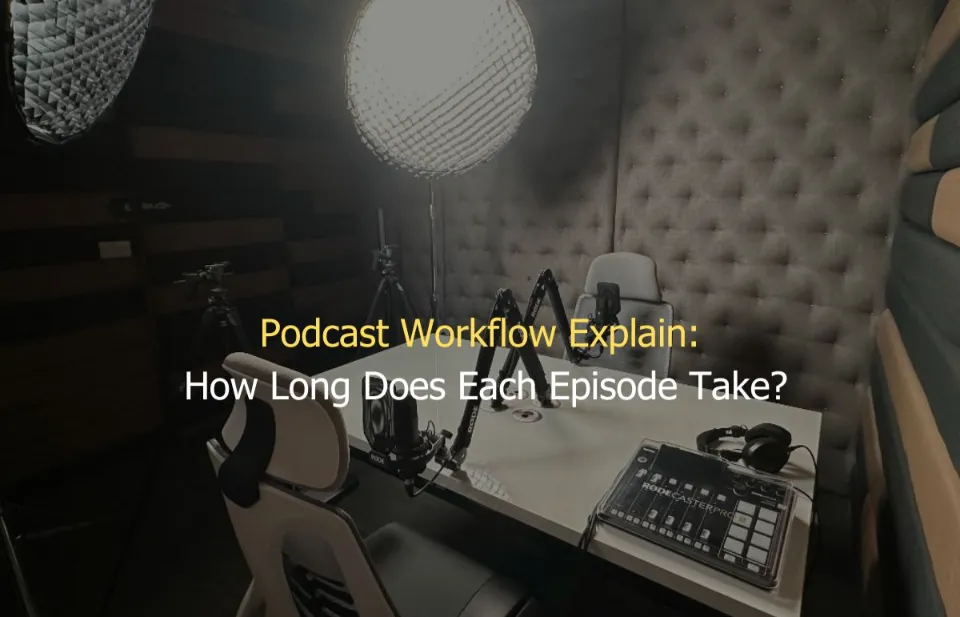
Where you record matters as much as what you say. Home recordings pick up HVAC hum, street noise, keyboard clicks, and room echo. That background noise adds hours to your editing time. Consequently, professional podcast recording in a dedicated podcast studio gives you clean, broadcast-ready audio right from the start. You walk in, set levels, and record. No furniture rearranging to reduce echo. No waiting for the neighbour to stop mowing.
A typical in-studio session for a 30-minute episode runs between 45 and 90 minutes. That includes warm-up, mic checks, and a retake or two. Because the audio comes out clean, your editing time drops dramatically. As a result, for many creators, recording in a professional space is the single biggest time-saver in their entire workflow.
How Soundproofing Reduces Editing Time
Soundproofing is not a luxury. It is a time-saving tool. When you record in an acoustically treated room, you capture only your voice, nothing else. There is no echo, no hiss, and no low-frequency rumble. That directly translates to less cleanup work in post-production. A noisy home recording can easily add 2 to 3 extra hours of editing per episode.
A soundproofed studio cuts that down to 30 or 40 minutes. At Delenzo Studio, every recording room is fully acoustically treated. You get broadcast-quality audio from a single take. No noise reduction plugins needed. No reverb removal. Just clean, natural sound that is easy to edit and great to listen to.
Post-Production
Post-production is where your raw recording becomes something worth publishing. This stage includes editing, noise reduction, EQ, compression, music, and final export. It also includes writing your show notes and creating episode artwork if needed. For most creators, post-production takes the longest of any stage. In other words, the quality of your recording directly affects how long this takes. Clean audio equals fast editing. Noisy audio equals a long, frustrating afternoon.
Popular editing tools include Adobe Audition, Audacity, and Premiere Pro. Each has a learning curve. If you edit yourself, budget 2 to 4 hours per episode until you build speed. Alternatively, hiring a professional editor saves time but does add cost. Meanwhile, what happens in post-production defines how your show sounds to the world.
How Long Does It Take to Edit a Podcast Episode?
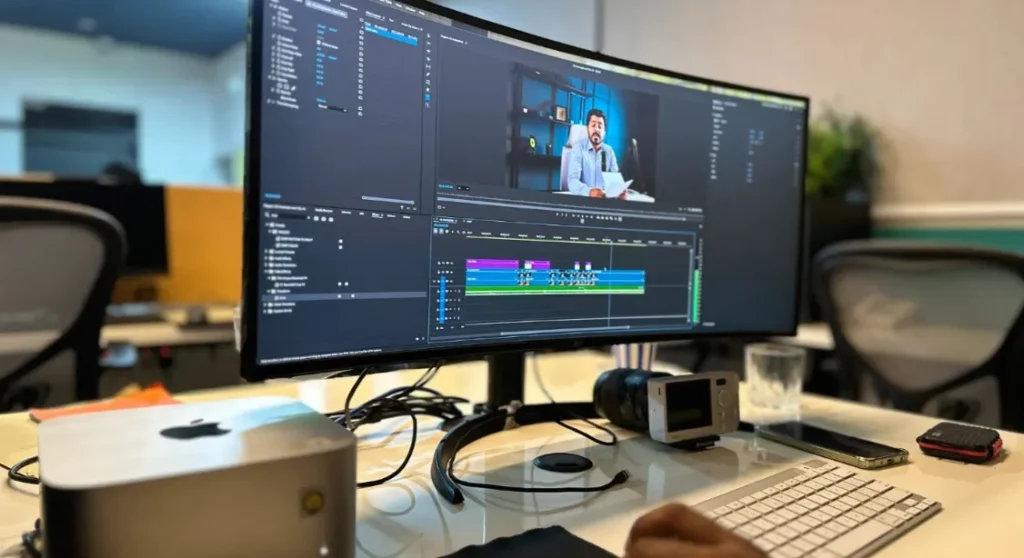
Editing a podcast episode takes roughly 1.5 to 3 hours for every 30 minutes of final content. That ratio improves as you gain experience. The main factors that affect editing time are audio quality, number of speakers, and episode format. A clean, focused solo episode can be edited in under an hour. A multi-guest conversation with background noise can take 4 or more hours.
Using editing tools for automated filler-word removal helps significantly. In addition, having a consistent episode structure helps reduce editing time. The cleaner your input, the faster your output. That is the golden rule of podcast editing.
Publishing and Promotion
Your episode is edited. But you are not done yet. Publishing involves uploading to a podcast host like Buzzsprout, Podbean, or Spotify for Podcasters. You will need a compelling episode title, show notes, timestamps, and a cover image. Well-written show notes improve your SEO and help new listeners find your show. After publishing, promotion begins. Share a short audiogram on Instagram. Post a quote card on LinkedIn. Send an email to your subscriber list with a link and a teaser. Done well, this takes 30 to 60 minutes per episode. Likewise, done poorly, it is missed growth. For example, templates for show notes and social captions can cut this stage in half.
Tips to Speed Up Production
You do not have to accept a 10-hour workflow. Here are proven, practical ways to move faster without sacrificing quality:
- Use a repeatable episode template — structure your show the same way every time
- Record in a treated studio — clean audio is faster to edit, always
- Batch record 3 to 4 episodes — shoot them in one session to save setup time
- Use AI tools like Adobe Audition — auto-remove filler words and silences instantly
- Create show note templates — fill in blanks instead of writing from scratch
- Repurpose your audio — turn clips into reels, quotes into graphics, transcript into blog posts
- Schedule social posts in advance — use Buffer, Later, or Publer to automate promotion
- Outsource editing — if your hourly value exceeds the editor’s rate, delegate it
Batching Episodes and Templates
Batching is one of the most powerful habits a podcaster can build. Instead of recording one podcast episode per week, you block a full day and record three or four in a single session. Your gear is already set up. Your mindset is already in creative mode. You eliminate the weekly friction of setting up, warming up, and tearing down. Pair batching with a solid episode template with a fixed structure for your intro, segments, and outro.
That template cuts your prep time from 90 minutes down to 20. Similarly, over a month, batching and templates can save you 6 to 8 hours of total production time. Many professional podcasters record an entire month of content in a single four-hour studio day.
Why Professional Equipment Saves You Hours
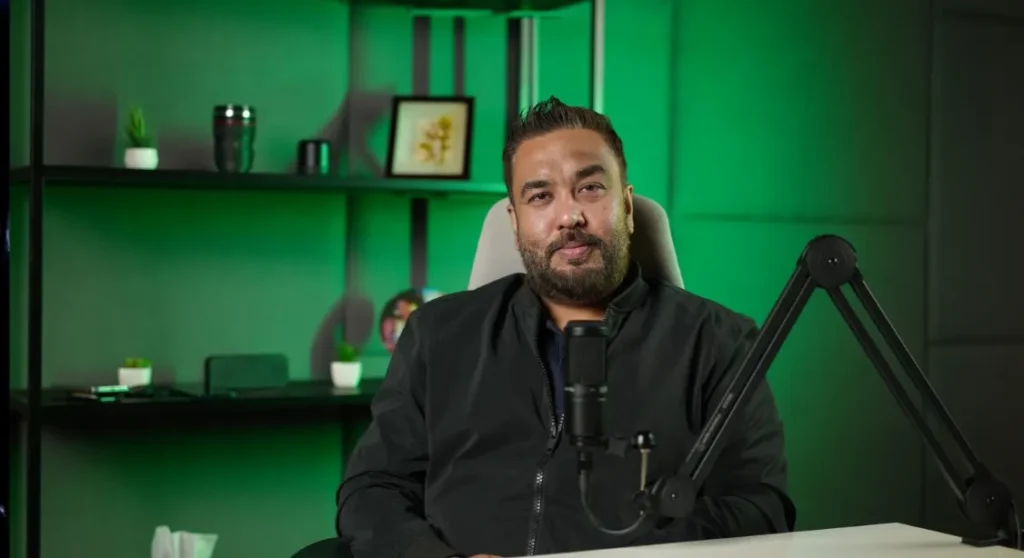
Your gear directly affects how long your podcast episode takes to produce. A budget microphone in a reflective room creates audio problems that take hours to fix. Professional equipment captures your voice accurately the first time. Fewer retakes. Cleaner signal. Less post-processing. That means faster editing, better listener experience, and a more consistent show. The time you save in editing often justifies the investment in good gear especially if you record regularly. In contrast, poor-quality setups increase workload instead of reducing it. Studios equipped with professional tools give you that advantage without the upfront purchase cost.
High-End Microphones and Mixers
The microphone is your most important piece of gear. Industry favorites like the Audio Technica AT2040, and Rode NT1 are popular for good reason. They capture warm, detailed audio with minimal self-noise and great off-axis rejection. Pair any of those with a quality audio interface like the Focusrite Scarlett or Rodecaster Pro II and your signal chain is solid.
At Delenzo Studio, our booths are equipped with broadcast-grade microphones and mixers. You plug in, set your levels, and start talking. The result is clean, professional audio that needs very little correction in post. Less correction means less time. And less time means more episodes. Producing a great podcast episode becomes much easier when your workflow and recording environment are optimized.
Record Your Podcast and Walk Out with More Content
Here is something most podcasters do not think about until much later. When you are already in the studio mic ready, lights on, looking your best, why stop at audio? At Delenzo Studio, you can record your podcast episode and add on professional headshots or behind-the-scenes video in the same booking. Those headshots become your podcast cover art, website bio image, or press kit photo. That BTS video becomes Instagram reels, YouTube shorts, and LinkedIn content.
Ultimately, one visit gives you multiple content types and maximum return on your time. It is a smart move for any creator who wants to grow their brand, not just their podcast. And since you are already there and already warmed up, the whole thing flows naturally. Book a podcast episode session at Delenzo Studio and leave with everything you need to show up across every platform.
Frequently Asked Questions
Editing 1 hour of raw audio typically takes 3 to 5 hours. That ratio depends on audio quality, number of speakers, and how much cleanup is needed. Clean studio recordings edit faster sometimes in under 2 hours. Noisy home recordings can take 6 or more hours. Better audio going in always means less work coming out.
Yes, and it is very achievable with the right setup. First, come in prepared with an outline and a guest brief. Next, record in a professional studio for clean audio. Then, use fast editing tools like Adobe Audition or Audacity for quick cleanup. Ultimately, allow 5 to 6 focused hours and you can record, edit, and publish in the same day.
It depends on whether you edit in-house or outsource. Self-editing: your files are ready the same day or within 24 hours. Professional editing services typically deliver within 2 to 5 business days. At Delenzo Studio, turnaround depends on the package you choose. Ask your engineer at booking to confirm your timeline.
The best episode length in 2026 is 20 to 40 minutes for most formats. Listener attention has shortened. Concise, focused episodes perform better on Spotify and Apple Podcasts. Interview shows can run up to 60 minutes if the conversation stays tight. Educational solo episodes do best between 15 and 25 minutes. Always match your length to your listener’s commute or routine.
Podcast studio rental in Lahore typically ranges from PKR 15,000 to PKR 30,000 per session, depending on the facility, equipment, and duration. Generally, basic setups cost less. On the other hand, professional spaces with engineers, acoustic treatment, and broadcast-grade gear sit at the higher end. Meanwhile, Delenzo Studio offers competitive rates with full studio access. For the most accurate details, contact us directly for current pricing.
Yes. Delenzo Studio provides a professional sound engineer with every studio booking. Your engineer handles mic setup, gain levels, monitoring, and real-time quality checks during your session. So you focus entirely on your content. No technical knowledge needed. You just show up, talk, and leave with great audio.