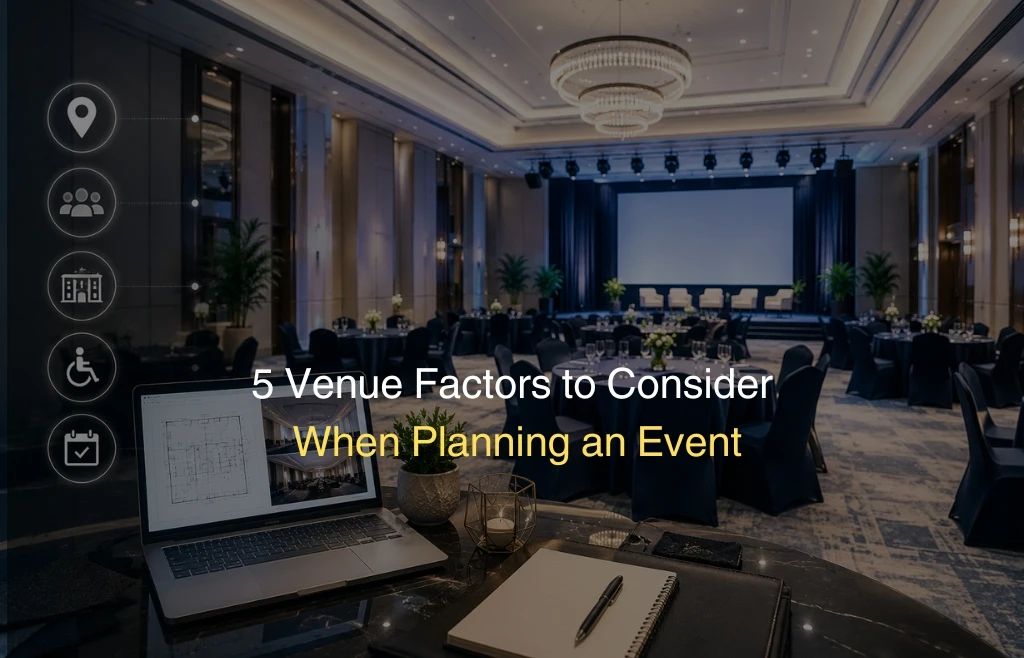
Picking the wrong venue can ruin a perfectly planned event. Successful event planning starts long before the day itself and one of the biggest mistakes people make is getting the venue wrong.
Everything looked right on paper, great photos, fair price, good reviews. Then the actual day arrives and the cracks show up fast. The parking is a nightmare, the sound cuts out, and the room feels half-empty.
These problems are avoidable. You just need to check the right things before you sign anything.
This guide walks you through five venue factors that actually matter including a bonus factor most people skip entirely. Whether you are organizing a corporate seminar, a product launch, or a creative workshop, these points will save you real headaches.
Factor 1 — Budget: Let Your Numbers Set the Parameters
Start with your budget. Not with browsing venues on Instagram. This sounds obvious, but most event planners do it backwards. They fall in love with a space first, then try to make the numbers work. That is a trap.
Instead, set a clear venue budget before you look at anything. A good rule of thumb is to allocate 25 to 35 percent of your total event planning budget to the venue itself. Everything else: food, AV, decor, staffing fits around that number.
Also, get clarity on what the venue quote actually includes. Many venues charge separately for:
- Tables and chairs
- Parking access
- Cleaning fees
- Security deposits
- Overtime hours
A venue that seems affordable can quickly become the most expensive line item once you add it all up. So ask for a full breakdown, not just a headline price. Once your budget is locked in, the next decision that will make or break attendance is where your event actually is.
Factor 2 — Location: Convenience Is Not Optional
Location affects attendance more than almost anything else. If people struggle to get there, many simply will not show up.
Think about your audience first. Consider whether they are driving, taking public transport, or coming from out of town. The right answer changes based on who your guests actually are.
For local professional events, central accessibility matters most. For intimate creative sessions or workshops, a quieter neighbourhood can work well as long as parking is easy and directions are clear.
There are a few location factors worth checking specifically:
Parking availability: Check whether parking is free, paid, or valet and whether there is enough space for your expected turnout. A venue with no nearby parking will frustrate guests before the event even starts.
Transport links: The venue should be close to a metro station, main road, or bus route especially for guests who do not drive.
Neighbourhood context: The surrounding area should be safe and presentable. Guests form impressions before they walk through the door.
For events in Lahore, this is especially important. Traffic can be unpredictable and poor location choices are one of the most common event planning mistakes organizers make. A central, easily reachable event space Lahore removes friction for your attendees right from the start.
Factor 3 — Capacity and Layout: Size Is About More Than Headcount
Capacity is not just about fitting everyone inside. It is about how space actually feels when people are in it.
A room that holds 200 people in theory might feel cramped with 150 if the layout is wrong. Conversely, a 100-person event in a 300-capacity hall can feel cold and underpopulated.
So always ask for the practical capacity not the fire code maximum. These numbers are often very different.
Beyond headcount, think about layout flexibility. Different events need different arrangements:
- Theatre style works for presentations and talks
- Classroom style suits training sessions
- Boardroom style fits executive meetings
- Cluster seating works for networking events
A good venue can reconfigure the space to match your format. If the layout is fixed, that venue may not be right for your event type.
Also consider flow. Entry points, registration areas, and restroom placement all affect guest experience. Poor flow creates bottlenecks, and that creates frustrated guests.
If you are planning a workshop space Lahore experience, layout becomes even more critical. Interactive sessions require room to move, small group areas, and ideally writable wall surfaces or breakout zones.
Factor 4 — Technical Facilities and AV Infrastructure
This is the factor that catches organizers off guard more than any other. A projector that is incompatible with your laptop, a microphone with feedback issues, or only two power outlets in the entire room can derail an event entirely. Technical failures are not just annoying, they damage your credibility.
Before you book, verify the following technical details with the venue:
Projection and display: Confirm whether a built-in projector or screen is available, its resolution, and whether it supports HDMI and USB-C inputs.
Sound system: Check if microphones are included, whether they are wired or wireless, and if a sound technician is on-site or available on request.
Internet connectivity: Ask about the Wi-Fi speed and whether there is a dedicated connection for event use or a shared one with other tenants.
Power access: Ensure there are enough outlets for your full setup and confirm their positioning relative to the presentation area.
Lighting: The venue should offer dimmable and adjustable lighting, with blackout options available for film or demo sessions.
If a venue cannot provide these details clearly, that is already a red flag. Good venues know their technical specs and share them upfront.
For more complex productions live streaming, hybrid events, panel recordings you need a venue built for that from the ground up. An event studio Lahore with professional-grade AV infrastructure will serve you far better than a multipurpose hall with rented equipment. When the technical side runs smoothly, your guests focus on the content not the chaos.
Factor 5 — Food and Beverage
Food matters more than people think. It shapes the mood, the energy, and how guests talk about your event afterwards. Get the food and beverage arrangement right from the start. There are generally three models venues use:
In-house service. The venue handles everything. This is convenient but limits your menu options. Always request a tasting before you commit.
Approved vendor list. The venue allows only certain vendors. Check if your preferred vendor is on the list. If not, negotiate.
Open vendor policy. You bring whoever you want. More flexibility, but more coordination work on your end.
For multi-session events, think about timing too. Refreshments between sessions and a separate breakout area for meals keep energy levels high and the main room clean. Eating in the event room often leads to distractions and mess.
These details add up. A smooth food and beverage experience keeps your guests comfortable, focused, and talking about your event for the right reasons.
Bonus Factor — The Site Visit: Never Book Without Seeing It First
Photos lie. Or at least, they tell an incomplete story. A professional shoot with wide lenses and perfect lighting makes most spaces look larger and better than they are. The only way to know what you are actually booking is to visit in person.
During your site visit, pay attention to things photos never show:
Acoustics. The space should have minimal echo and no noise bleed from neighbouring spaces or street traffic. This matters enormously for presentations and recordings.
Natural light: The quality of light at the time of day your event runs matters. Morning light in a west-facing room is very different from afternoon light.
Smell and cleanliness. This sounds blunt, but it matters. Guests notice when a space does not feel clean.
Staff behaviour. The venue team’s attitude during a sales interaction often reflects how they will behave on your event day.
Visit at a time that mirrors your actual event schedule. If your event runs in the evening, visit in the evening. Lighting, noise levels, and traffic patterns all change throughout the day.
A site visit takes an hour and is one of the most overlooked steps in event planning. It can save you days of damage control after a bad event experience. Once the site visit confirms the venue is the right fit, the next step is making sure the contract protects you before you commit.
Venue Contract Red Flags — What to Check Before Signing
The contract is where events get complicated. Read every line before you commit.
Here are the specific clauses that cause problems most often:
Cancellation and refund policy: Check the venue’s cancellation and rescheduling terms, including whether the deposit is refundable. Circumstances change, make sure you are protected.
Noise and time restrictions: Many venues have strict cutoff times. If your event runs long, you may face penalties or a forced shutdown. Confirm the latest permitted end time in writing.
Exclusivity of the space: Other events running in adjacent areas simultaneously can create noise bleed and shared parking disruptions. Confirm full exclusivity in writing.
Force majeure and weather clauses. For outdoor or semi-outdoor events, understand exactly what protections exist if weather disrupts your plans.
Insurance requirements. Some venues require event organizers to carry liability insurance. Factor this into your budget if applicable.
Planning an event? This article is your blueprint for success—check it out now!
Conclusion
Good event management starts with good venue decisions. The five factors above, budget, location, capacity, technical facilities, food and beverages, give you a solid framework to evaluate any space with confidence. Add the site visit and a thorough contract review, and you are making informed decisions instead of hopeful guesses.
If you are looking for a reliable event venue in Lahore that genuinely ticks these boxes, Delenzo Studio is worth a visit. It is a purpose-built creative and corporate event planning space designed for the demands of modern events, comfortably accommodating groups of 20 to 25 people. From flexible layout configurations to professional AV infrastructure and a central Lahore location, Delenzo Studio is built to reduce the friction that comes with most venues.
Whether you are hosting a brand activation, a corporate training, workshop, a product launch, or an intimate creative session it is the kind of space where things go right because the right things were thought through in advance.
Because ultimately, the best events are not the result of luck. They are the result of choosing the right space from the beginning.
Frequently Asked Questions
The most important factor when choosing an event venue is balancing budget, location, and capacity. Your budget sets the boundaries, location drives attendance, and capacity determines guest comfort. Getting all three right from the start sets the foundation for a successful event.
For most events, booking a venue 6 to 12 months in advance is recommended. Large or high-profile events may require 12 to 18 months. Smaller gatherings can be secured 1 to 2 months ahead. Popular venues and peak season dates fill up fast, so earlier is always better.
During a venue site visit, check the capacity, layout flexibility, AV setup, and overall cleanliness. Also verify parking availability, restroom proximity, and noise levels between spaces. Visiting at the same time of day as your event gives you the most accurate picture of the space.
Choose a venue that comfortably fits your expected guest count without feeling overcrowded or empty. A good rule is to select a space slightly larger than your headcount to allow for last-minute additions. The right size keeps the atmosphere comfortable and the energy in the room just right.
When booking an event venue, the initial quote is rarely the final price. Hidden costs can push your budget up by 20 to 30 percent if not anticipated. Watch out for service charges, setup and breakdown fees, overtime charges, and restrictions on outside vendors.