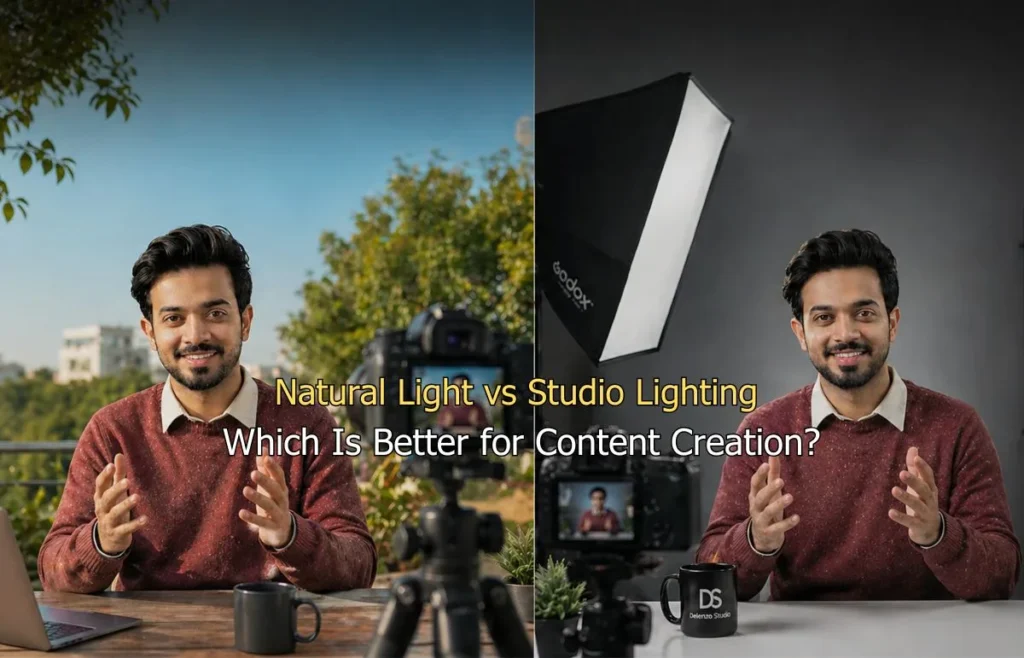
You set up your camera. The shot looks perfect. Then a cloud moves and everything falls apart. Every creator facing the natural light vs studio lighting choice knows this feeling. One moment it wraps everything in warmth. Yet a single cloud steals it all.
Natural light comes from the sun. It is free, soft, and flattering. Many creators love it because it feels warm and real. However, it shifts with weather, time of day, and season.
Studio lighting means artificial lights you control. Ring lights, softboxes, and LED panels give you consistent results every time. You set the mood. You decide the look.
Both options have real value. Essentially, the right choice depends on what you create, where you shoot, and what your audience expects. This guide breaks it all down simply. Whether you shoot at home or in a professional space, you will find clear, honest answers here.
Natural Light — Pros and Cons for Content Creators
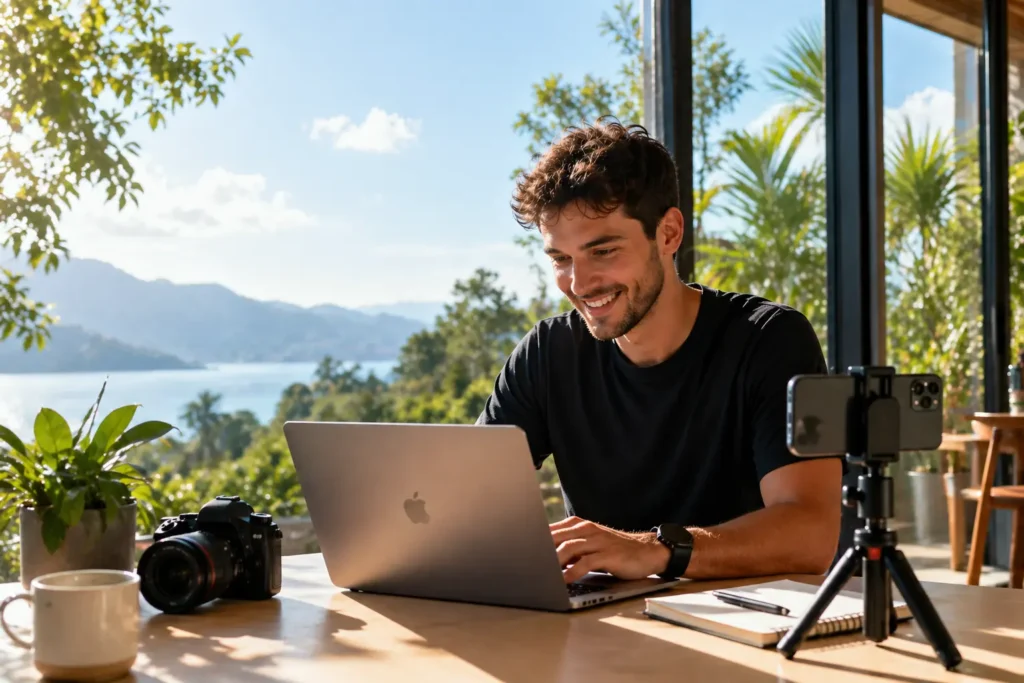
Natural light is the most accessible tool any creator has. You do not need to buy anything. Simply find a good window light and you are ready.
Why creators love natural light:
- It feels organic and authentic on camera
- Skin tones look soft and true to life
- It works beautifully for lifestyle, food, and fashion content
- Zero setup time on a bright, clear day
- It creates a relaxed, approachable mood in your videos
Many home-based creators in cities like Lahore and Karachi shoot near large windows in the morning. The light is soft, even, and cinematic without any gear.
Additionally, outdoors, natural light opens up even more creative possibilities. Open shade like shooting under a tree or beside a building gives you soft, diffused light without harsh shadows. Many travel creators, fitness coaches, and lifestyle influencers shoot entirely outdoors. Beyond that, the environment itself becomes part of the visual story.
But natural light comes with real limitations:
- For instance, it changes throughout the day, sometimes dramatically
- Cloudy days can ruin a planned shoot
- Outdoor shoots depend on location, crowds, and unpredictable surroundings
- Harsh midday sun creates unflattering shadows
- You cannot control direction or intensity without diffusers and reflectors
- Shooting indoors with limited windows can be very tricky
As a result, if you rely only on sunlight, you are at the mercy of the weather. That is a real problem for creators on a consistent publishing schedule. The golden hours just after sunrise and before sunset give the most beautiful natural light. That window is short. Miss it and you are waiting until tomorrow.
Even so, natural light suits spontaneous, lifestyle-driven content well. But for professional, repeatable results, it often needs help.
Studio Lighting — Pros and Cons for Content Creators
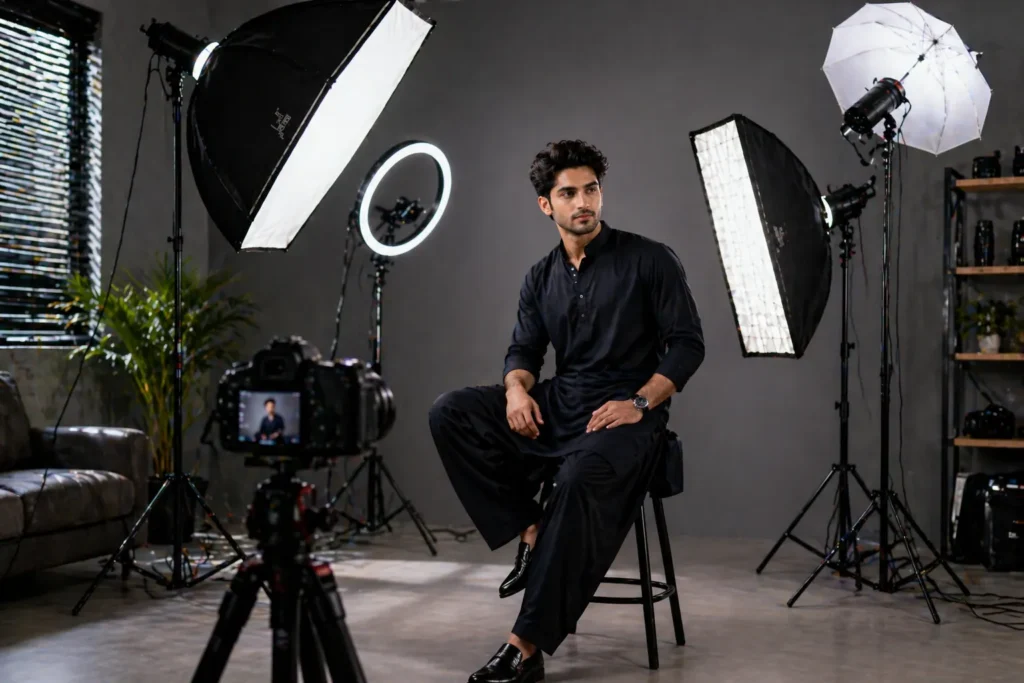
Studio lighting gives you full creative control. You decide where the light falls, how soft or hard it is, and what mood it creates. And that consistency is powerful for brands and serious creators.
Why studio lighting works so well:
- You get the same result every single shoot
- Works at any time of day or night
- You can shape light with modifiers like softboxes, umbrellas, and grids
- No weather dependency at all
- Ideal for professional-grade videos, product shots, and branded content
A three point lighting setup key light, fill light, and backlight is a simple standard that transforms any space into a studio. Many professional content studios use this as a baseline.
The challenges with studio lighting:
- There is an upfront cost for quality gear
- Setup takes time and some learning
- Poor-quality lights can look harsh or create unflattering color temperature
- Requires consistent positioning to maintain your visual style
Once you learn the basics, in practice, studio lighting is not as complicated as it seems. LED lights for content creators are now more affordable and accessible than ever. A good LED softbox and a backlight can dramatically upgrade your content quality in one session.
Ultimately, for creators building a brand, studio lighting removes variables. You control your look completely. That matters a lot when consistency builds trust.
Natural Light vs Studio Lighting — By Content Type
Every content format has different needs. Therefore, understanding natural light vs studio lighting by use case helps you make the right call for your specific work.
For YouTube Videos
The best lighting for YouTube videos is one that stays consistent across every upload. Your audience needs to recognize your visual style across every video.
Natural light can work well for casual vlogs, outdoor content, and lifestyle channels. It gives a warm, personal feel. But it is unpredictable. If your upload schedule is fixed, sunny Tuesdays and cloudy Fridays will look completely different.
In contrast, studio lighting wins for most YouTube creators. A softbox setup gives you the same quality every time. Your viewers notice that professionalism, and it builds trust and channel identity.
Winner: Studio Lighting for consistency, brand identity, and year-round reliability.
For Podcast Recording (Audio + Video)
Video podcasts are booming. If you record with a camera, your lighting matters just as much as your microphone.
Many podcasters record near windows for a natural, conversational feel. It works. But if your podcast happens at night or in a windowless room, natural light simply is not an option.
The best lighting for podcast recording is warm, consistent, and flattering on camera. Studio lighting lets you record at any time. You can therefore create a warm, interview-style setup that looks polished and inviting. A bias light or warm LED panel behind the camera works beautifully for this format.
Beyond the lighting itself, recording in a professional studio means a trained team is already there. For instance, if a light shifts, a panel flickers, or the color temperature looks off on camera, someone fixes it immediately. You stay focused on your conversation. The team handles every technical detail for you.
Winner: Studio Lighting for flexibility, consistent video quality, and any-time recording.
For Product Photography
Product photography is about accuracy and control. Your customer needs to see the product clearly. Colors must be true. Details must be sharp.
Natural light can be stunning for product photography, especially lifestyle shots. A wooden table near a window, soft morning light, and a clean background create beautiful results. In particular, many local brands in Pakistan use this approach for social media.
On the other hand, for e-commerce, catalog, or white-background photography, studio lighting is essential. You need even, shadowless light that does not shift. Continuous LED lights or strobe lighting give you that precision.
Winner: Depends on the goal natural light for lifestyle product shots, studio lighting for e-commerce and catalog work.
For Portrait and Headshot Photography
Portraits need flattering, controlled light. Both natural and studio light can deliver stunning results here.
A north-facing window on a bright day creates beautiful, soft portrait light with no direct sun. Natural light photography works especially well for portrait and personal brand shoots. It is a favorite among portrait photographers who prefer a softer, more organic look. Many headshot clients prefer this look because it feels warm and approachable.
Studio lighting, however, gives photographers total control. You can recreate the same flattering setup regardless of time or weather. Clamshell lighting two softboxes above and below the subject is a popular portrait technique that produces smooth, professional results.
For professional headshots and branded portraits, studio lighting is more reliable. Meanwhile, for editorial or lifestyle portraits, natural light adds soul.
Winner: Studio Lighting for professional headshots. Natural light for editorial and personal brand photography.
For Social Media Reels and Short-Form Content
Short-form content thrives on authenticity. Reels, TikToks, and YouTube Shorts generally feel more engaging when they look real and unfiltered.
Natural light works very well here. A quick shoot near a window, outdoors in shade, or during golden hour creates content that feels spontaneous and genuine. Audiences on these platforms respond well to that.
But many creators batch-record their reels. They shoot ten pieces of content in one evening session. In that case, studio lighting is essential. It makes every clip look consistent and sharp regardless of the time.
Winner: Natural Light for single spontaneous shoots. Studio Lighting for batched, branded content.
Natural Light vs Studio Lighting — Quick Comparison Table
| Factor | Natural Light | Studio Lighting (Delenzo) |
| Cost | Free | Hourly booking, no gear cost |
| Consistency | Weather dependent | Consistent, professional output |
| Lighting | Window-based | Professional lighting setup |
| Control | Very limited | Full control by expert crew |
| Timing | Daytime only | Flexible (morning to evening) |
| Best For | Casual content | YouTube, podcasts, product shoots |
| Support | None | On-site technical support |
| Backgrounds | Limited | Multiple curated setups |
| Results | Inconsistent | Reliable, brand-ready quality |
Conclusion
After covering both sides honestly, here is a simple, practical guide.
Use natural light when:
- You are just starting out and building your content habit
- You create lifestyle, food, travel, or outdoor content
- Your shoot location has large windows with good daylight access
- You want a warm, organic, authentic visual feel
- You are shooting single spontaneous reels or personal brand moments
- Budget is currently limited and you want quality without gear
To be clear, natural light is not a compromise. Many iconic creators and photographers build entire visual identities around it. It is a legitimate choice, especially when used thoughtfully.
Use studio lighting when:
- You have a fixed content schedule and need consistent results
- You record videos or podcasts at night or in windowless spaces
- You shoot product photography for e-commerce or brand clients
- You want full control over mood, shadow, and color temperature
- You are building a professional content brand with a repeatable look
- You want to scale your production and take on client work seriously
In fact, studio lighting is an investment that pays off quickly. Once your setup is dialed in, you save time, reduce retakes, and deliver professional results reliably.
Ready to Shoot Without the Guesswork?
Most creators in Lahore waste hours chasing the right light, adjusting curtains, waiting for clouds to pass, reshooting because the color looks off on camera.
At Delenzo Studio, that problem simply does not exist.
Launch your podcast like a pro—explore the ultimate guide to equipment and setup today!
Here is what a single session at Delenzo gets you:
- Consistent, professional lighting already set up and waiting
- Multiple background and set options for different content formats
- On-site crew to handle technical adjustments while you focus on performance
- A controlled environment that works equally well at 9am or 9pm
- No equipment investment, no setup time, no weather dependency
Whether you are filming your first YouTube video, launching a branded podcast, or shooting a product line for an e-commerce store, one session at Delenzo will change how you think about your content quality.
Book Your Studio Session Today slots fill quickly.
Delenzo Studio, Gulberg, Lahore built for creators who are serious about their brand.
Frequently Asked Questions
Studio lighting is better for YouTube videos. It gives you the same quality every single shoot. Natural light works for casual vlogs but shifts with weather and time. Still, for a consistent look your audience recognizes, studio lighting is the more reliable choice.
Yes, natural light works for podcast video recording. It gives a soft, flattering, and budget-friendly look. Face the light source, avoid direct sunlight, and use curtains to diffuse harsh light. But it shifts with weather and time. For consistent, any-time recording, studio lighting is the more dependable option.
The best affordable studio lighting for content creators includes LED panels and COB lights. Top picks are the Amaran 100X and Ulanzi 200W Bi-Color COB Light. Both offer adjustable brightness and color temperature for professional results. They are budget-friendly, versatile, and work well for videos, podcasts, and branded content.
Soft, diffused, and consistent light works best for product photography. Use continuous LED lights or strobes paired with softboxes or umbrellas to eliminate harsh shadows. In addition, a three-point setup key, fill, and backlight highlights every product detail clearly. Natural light on overcast days also delivers beautiful, shadow-free results.
Position your subject facing a large window during daylight hours. Next, use white poster board or bedsheets to reflect light into shadows. Diffuse harsh sunlight with sheer curtains or white fabric. Film during golden hour just after sunrise or before sunset for the softest, most flattering natural light.